
In modern society, we often see sustainability as the holy grail our system needs to achieve, such as a net-zero-emission world or a fully circular economy. However, after running our existing models for multiple decades, it’s becoming increasingly clear that a new paradigm of sustainability is needed.
Indeed, over the years we have noticed a disconnect in sustainability that manifests in different forms: sometimes we frantically try to "save the world" while our personal lives are heading toward a cliff, while other times we proceed with some clever solution only to realize that it has made things worse.
In essence, we have been building a sustainable future based on unsustainable individuals and practices. But to understand this better, it would help to know how sustainability has been conceived in the past and present.
The Past (Sustainability 1.0): The Rise of Ecology
Historically, the Indigenous people built their way of life based on a deep understanding of the ecology, but the same cannot be said about the Europeans who saw the world as a resource to be exploited.
However, because history is largely written by the victors, the earlier models on sustainability tend to be based on the European perspective.
As far as we know, the first semblance of a sustainability model emerged in the 1700s, when the German mining industry was facing a serious timber shortage. At that time, mines required a vast amount of lumber for structural support and smelting, but the timber in the surrounding forests was being heavily depleted.
To solve this, a mining administrator named Hans Carl von Carlowitz proposed a novel idea: that we only harvest as much wood as the forest can naturally regrow. He has since become known as the father of sustainable yield forestry, and his work marks the first time the concept of sustainability entered our collective consciousness.
However, as the world became increasingly industrialized later, this led to systemic environmental degradation which fueled the environmental movement (particularly in the mid-20th century). The first sustainability model thus extended from forestry to ecology in general — forcing us to reevaluate how we should structure our large-scale systems.
The Present (Sustainability 2.0): From Ecology to Sustainable Development
By the 1980s, along with the concurrent development in the social justice movement, leaders in the field have realized that even if our ecology were perfectly preserved, the world would still not be able to function with rampant social issues and poverty.
Accordingly, these leaders began to formulate a framework that balances the need for both development and ecology. This then culminated in the now well-known Three Pillars of Sustainable Development, which was further popularized by the United Nations’ 1987 Brundtland report.
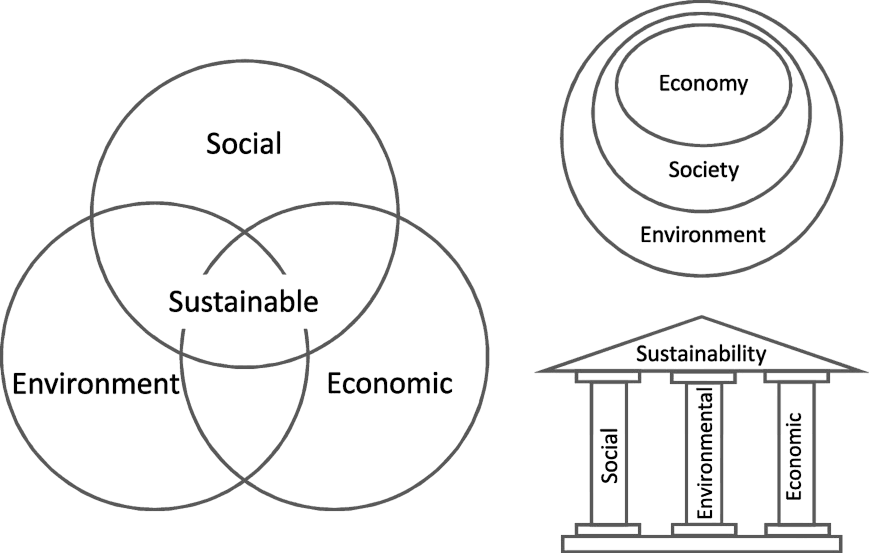
(in a business context, these same pillars are often reworded as Planet, People, and Profit — a model also known as the 3Ps or the Triple Bottom Line.)
In the early 21st century, nations began to adopt development goals based on this expanded model. This began with the eight Millennium Development Goals adopted in 2000, and the 17 Sustainable Development Goals adopted in 2015.
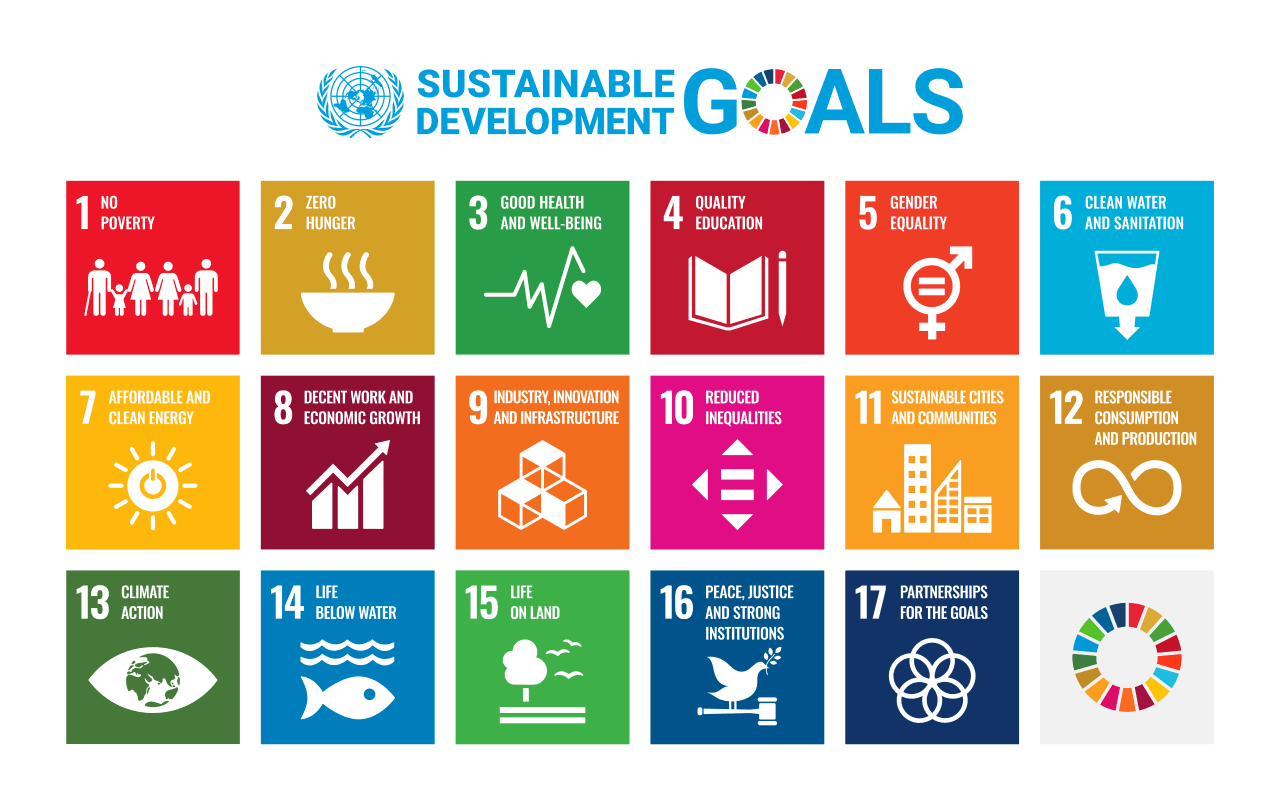
Since then, many variants based on these models have also been proposed. These include the nested-hierarchy model and the Doughnut Economics model.
The Future (Sustainability 3.0): From Sustainable Development to Sustainability
At this point, nearly everything we encounter about sustainability — be it circular economy, gender equality, regenerative agriculture or Inner Development Goals — is really about the things we need to attain sustainable development. However, what many don’t realize is that sustainable development is only a fraction of sustainability.
To see how, we just have to think about the entities around us that are trending toward chaos. This may involve, for example:
In each of these cases, many would agree that an element of unsustainability is at play, but these cases are generally ignored within our current confines of sustainability.
Why? Because our current sustainability models are centered around macrostructures, and elements pertaining to individuals’ inputs are conspicuously carved out of the equation. The problem with this approach is that it is often the individuals who have initiated our problems — and implosions in our world often don’t start from the top but from some tiny component.
As a result, we now have a hollow system that seems solid at the top but is fragile everywhere else, with business and unsustainable practices continuing as usual: our eco-friendly products increase while our ecology continues to worsen, and our medical system advances while chronic diseases continue to soar.
Obviously, all of these call for a new way of thinking about sustainability — an approach to sustainability that focuses on all human endeavors. Under this framework, unsustainability is tackled not only at the top but at all levels, and this is where people such as sustainabilitists can play a vital role.
Why? Because sustainabilitists don’t view sustainability as a toolkit for UN compliance — but as a master criterion for carrying out everything humans engage in. They seek to refine their habits, lifestyles and methods to avoid impending collapses — so that they can help themselves, their groups and their communities become more long-lasting.
However, in order for them to achieve all of those lofty goals, their personal health needs to be first and foremost quite sustainable. This means that they need to be constantly honing in on their health sustainability — so that they can prevent a localized health issue from turning into a vicious cycle.
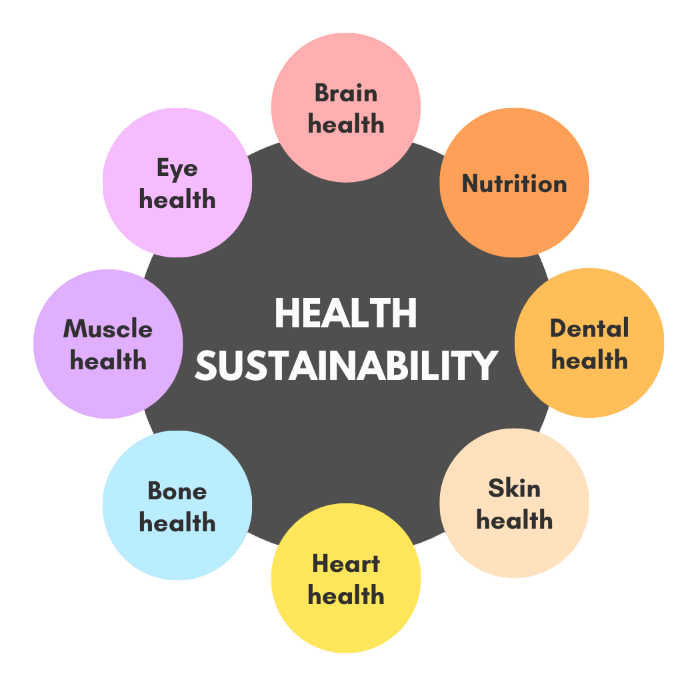
Beyond that, they also need to zoom out and realize that their health is only one of the dimensions; they need to work on satisfying all aspects of their personal sustainability as well.
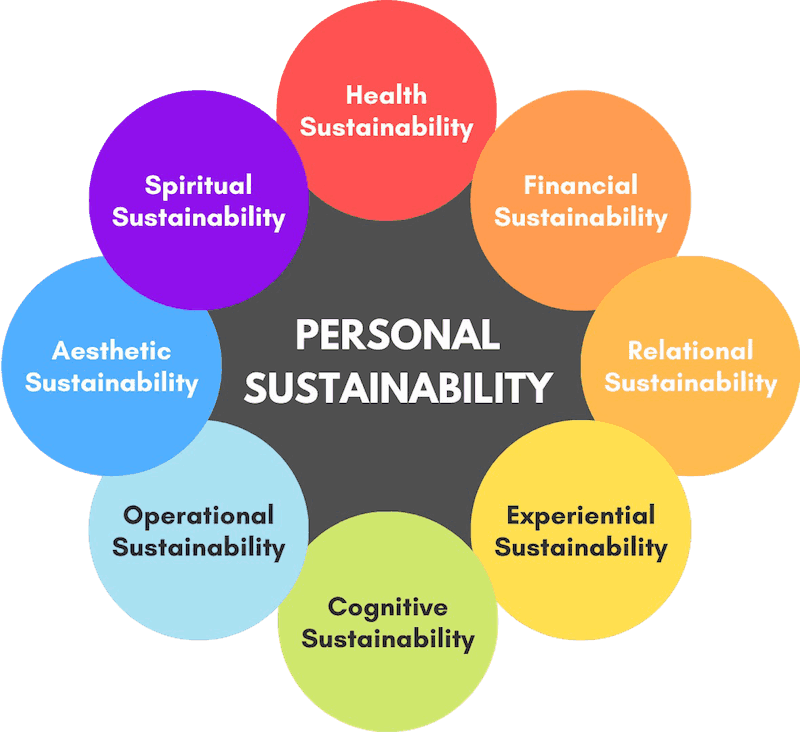
But even then, they still need to zoom out further and realize that the world is bigger than themselves. That is, they need to align their actions to uphold systemic sustainability at all levels.
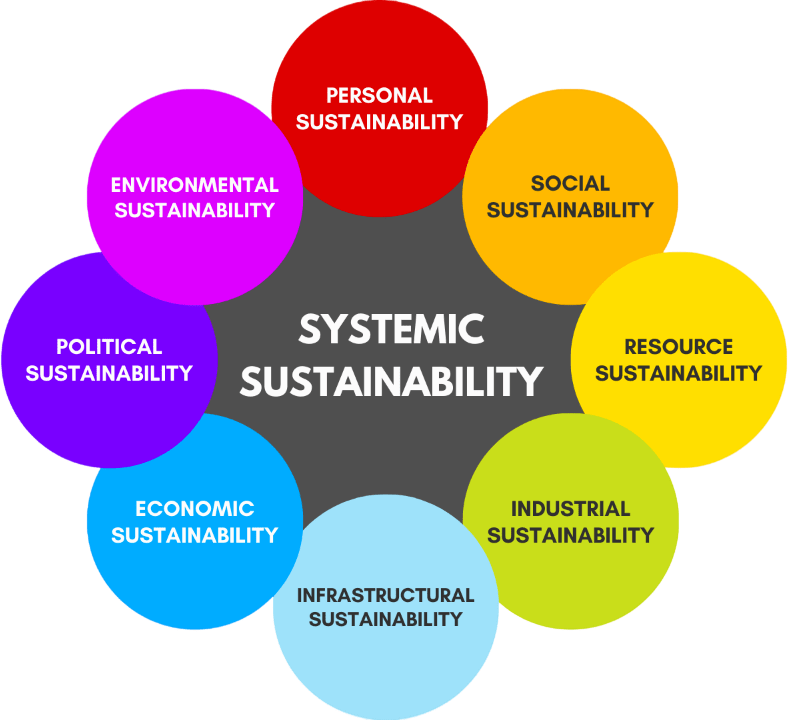
If they can do so, they would have naturally ushered sustainability to its final form — a framework that shifts from ecology and sustainable development to everything we do.
How Would This Model Affect Us?
Compared with the current models, which are top-down, unactionable and reductionistic, The Sustainabilitist Framework is bottom-up, actionable and holistic. There is a reason why it focuses on starting at the ground level and moving up — because doing so would transform us into people who truly live and breathe sustainability.
For example, when you are in the field working on your health sustainability every day, you would become more aware of the habits that can bring about your impending collapse. Its multi-dimensional nature would condition you to seek solutions that balance all factors — instead of settling for clever fixes that satisfy one aspect at the expense of another.
Similarly, as you transition to focus on all aspects of personal sustainability, you would become more aware of the difference between treating symptoms and treating root causes. You would begin to understand the full consequences of a decision better, and you would develop a sharper sense for spotting pseudo-solutions or false ideologies.
In other words, you would begin to acquire the firsthand experience needed to tackle sustainability issues — rather than being an outside spectator unknowingly perpetuating unsustainability.
Rebuilding Sustainability From Within
Throughout history, humans have repeatedly based their endeavors on narrow, short-term motives, and this has resulted in the highly destabilized world we currently live in: not only are many of us a few steps away from some cliff, but many of our creations are also on the verge of some catastrophe.
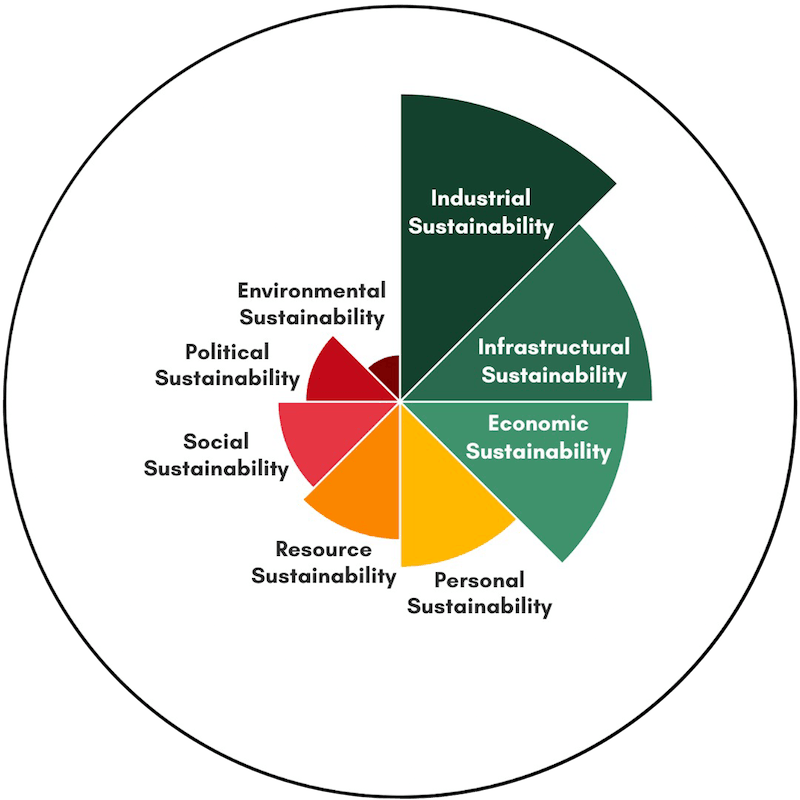
In order to stop the cycle of kneejerk reactions and regain sustainability, humanity may need to first go through a fundamental paradigm shift: it may need to embrace sustainability not as an out-of-touch theory but as a daily practice, and it may need to operate from a truly holistic, long-term perspective.
The problem with the existing models is that they have it exactly backward, since sustainability for the sake of development will not alter our identities and habits. These models may be able to force our entities into superficial compliance, but they will ultimately fall short of tackling unsustainability at all of its sources.
However, by embracing sustainability as a way of being and living, we may be able to develop more awareness of its absence and the skills needed to improve it. This may help us transcend pseudo-progress into progress that is truly omni-directional, and we may be able to foster a world where humanity is truly successful and free.

The next phase should be Regenerative Education:
Check it out to learn more!
https://medium.com/@kennywpeavy/regenerative-education-teaching-and-learning-that-heals-and-restores-4c82b445b3d6
Hi Kenny. Thanks for sharing. You may want to look up Inner Development Goals which cover many of these ideas.